

The project “The Bridges of Time: an integrated approach for improving the sustainable use of Nikopol-Turnu Măgurele cross-border cultural heritage”, code 15.2.1.104, e-MS code ROBG – 128, is co-financed by the European Union through the INTERREG VA Romania-Bulgaria Program, Priority Axis 2 A green region, Investment Priority 1.1 – Improving the sustainable use of natural heritage and resources and cultural heritage.
- The implementation period of the project is 31.03.2017 – 30.01.2022.
- The project is implemented in partnership between Nikopol Municipality, Pleven District – Bulgaria and TAD (Territorial and Administrative Division) Turnu Măgurele Municipality, Teleorman County – Romania.
- The main objective of the project is to improve the sustainable use of cultural heritage in the cross-border area Turnu Magurele – Nikopol and tourism by developing, implementing and promoting a common integrated approach.
- The main activities of the project are based on the implementation of innovative, high-tech and environmental solutions for investments in sustainable tourism infrastructure and include:
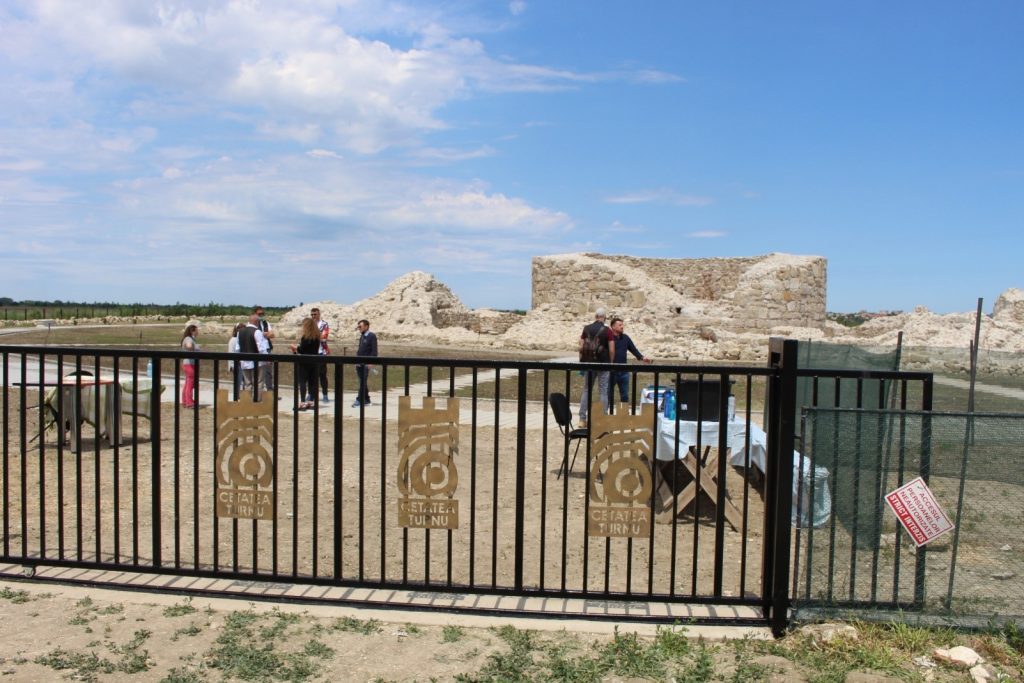
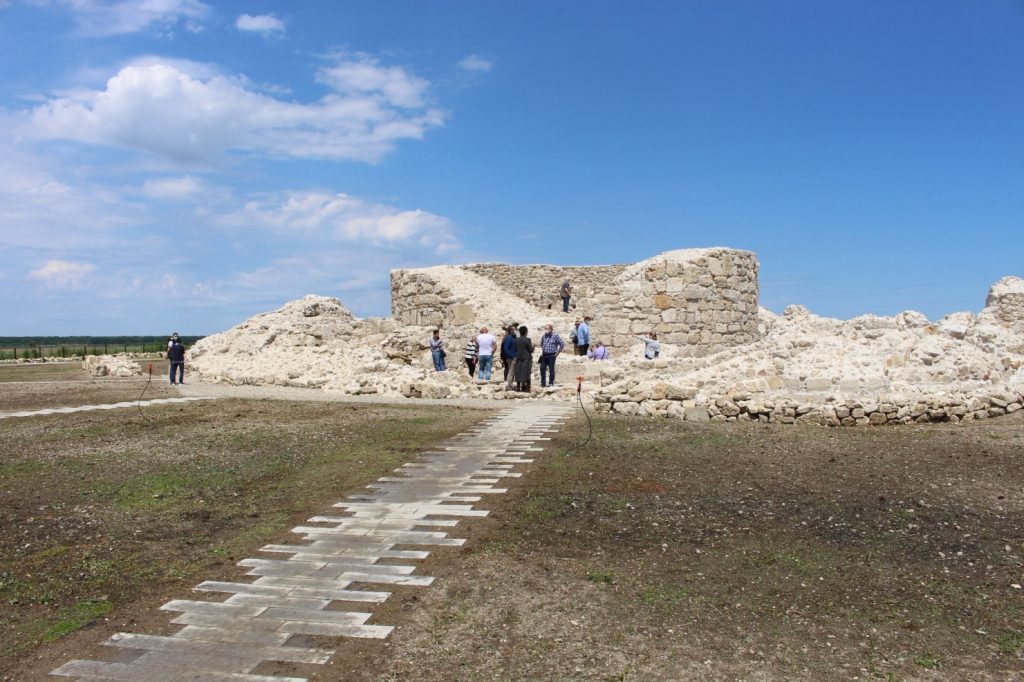
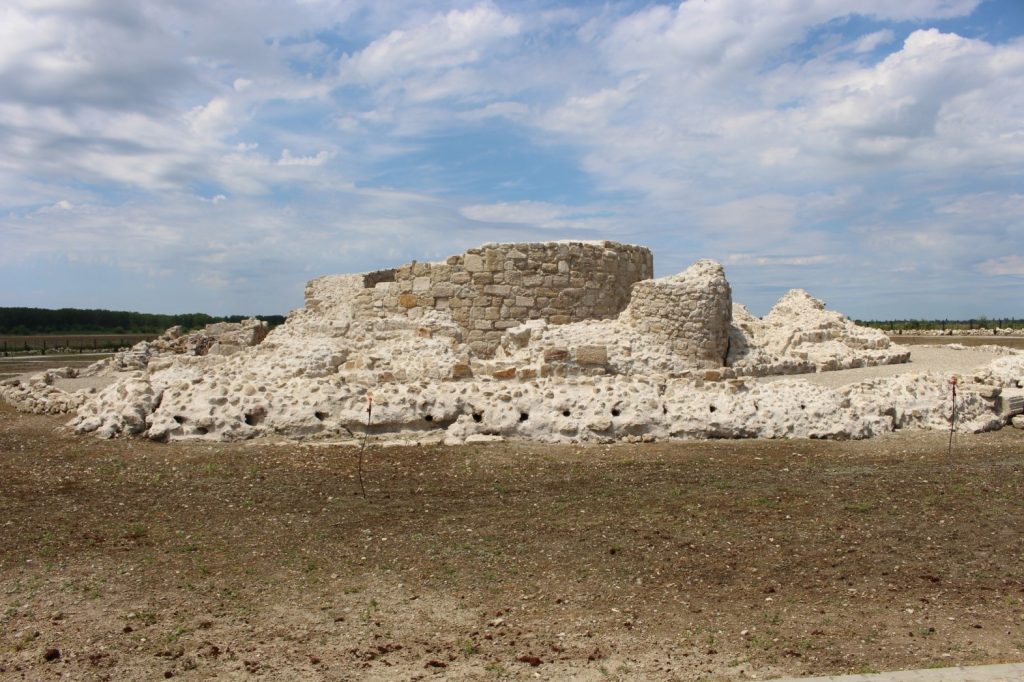
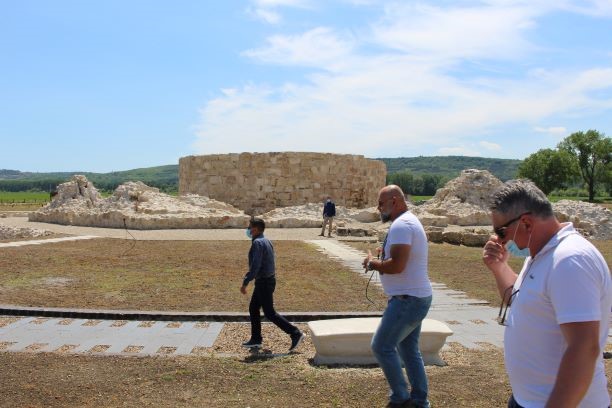
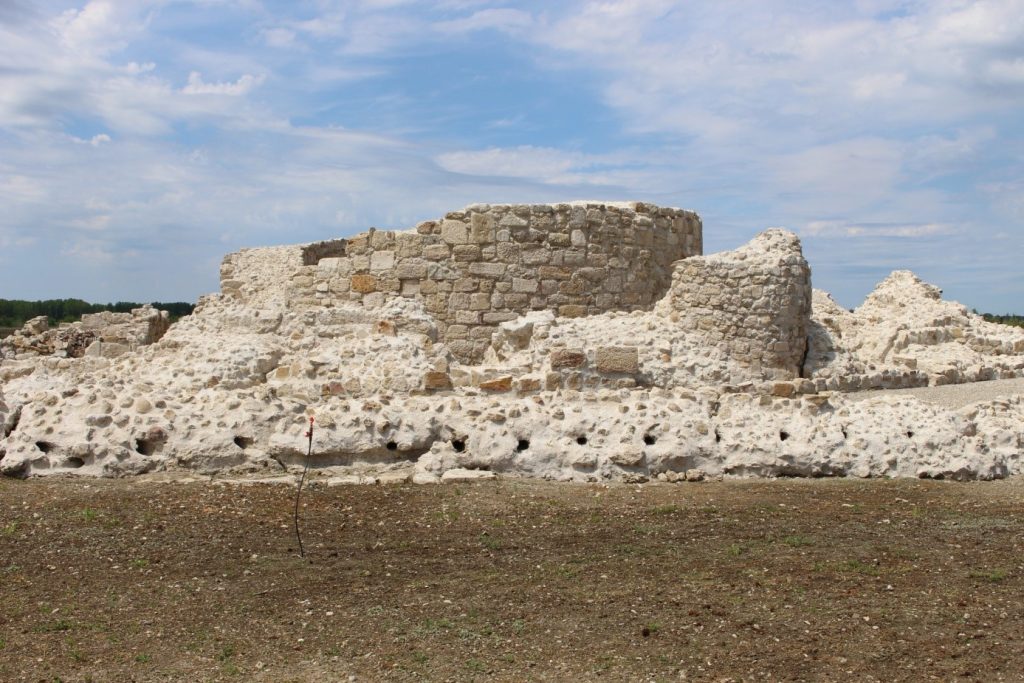
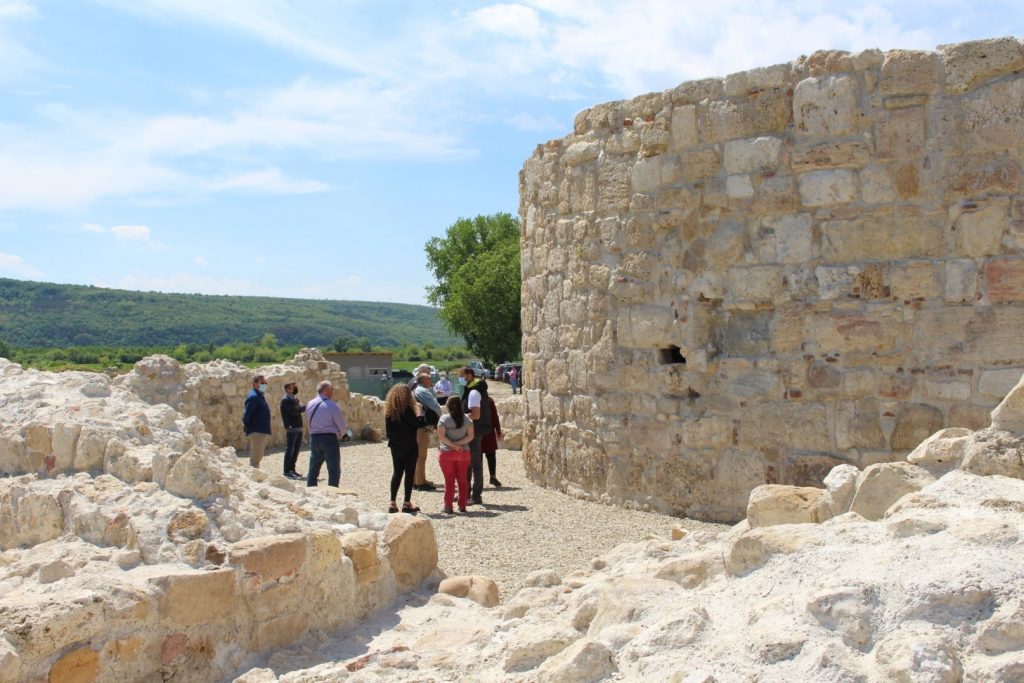
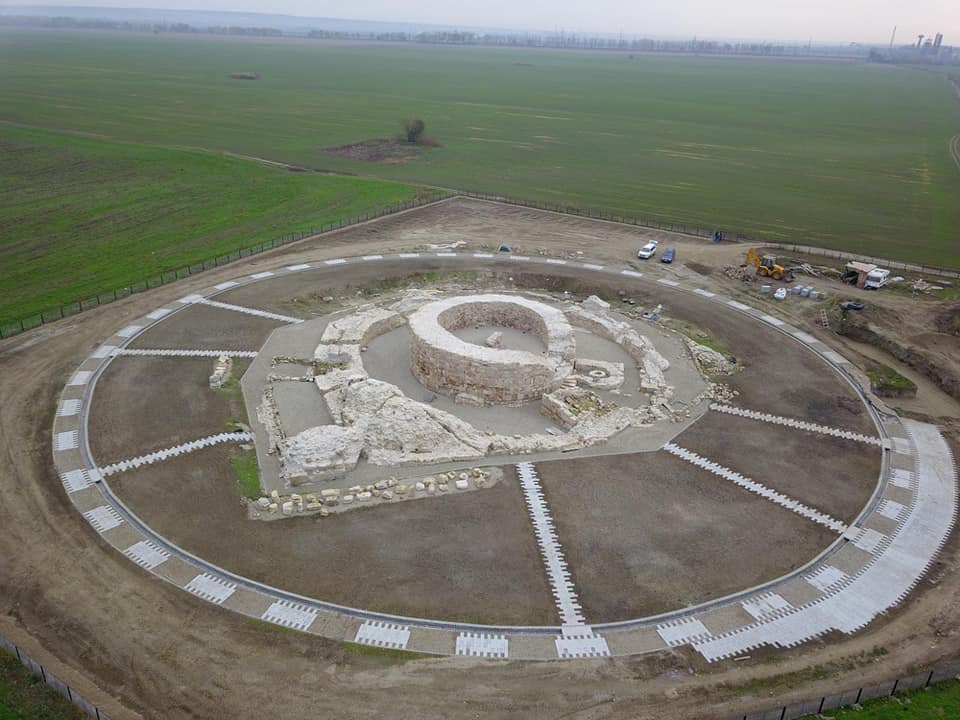
- arrangement, consolidation, conservation and restoration of the medieval fortress from Turnu Măgurele, stage 1;
- rehabilitation of the road to the Rock Church in Nikopol;
- construction of an open-air Archaeological Park-Museum “The Bridges of Time” in Nikopol;
- elaboration of a marketing strategy for the promotion of the cultural and historical heritage of the region and of the integrated products created within the project;
- creating an online tourism platform;
- organizing a 5-day festival “The Bridges of Time”;
- conducting an online and offline advertising campaign.
- The total value of the project is 5,836,225.82 euros, of which:
- Value of the EU contribution (ERDF): 4,960,791.94 euros
- State budget: 774,720.24 euros
- Own contribution: 100,713.64 euros
After the restoration, the “TURNU” Fortress, as an objective of national and international value, will be introduced in the domestic and international tourist circuit.
The design and execution of the arrangement, consolidation, conservation and restoration works were carried out by the S.C. INSPETI BUILDING RESTAURATION S.R.L, S.C. CREDO DESIGN S.R.L and S.C. INSPET S.A.
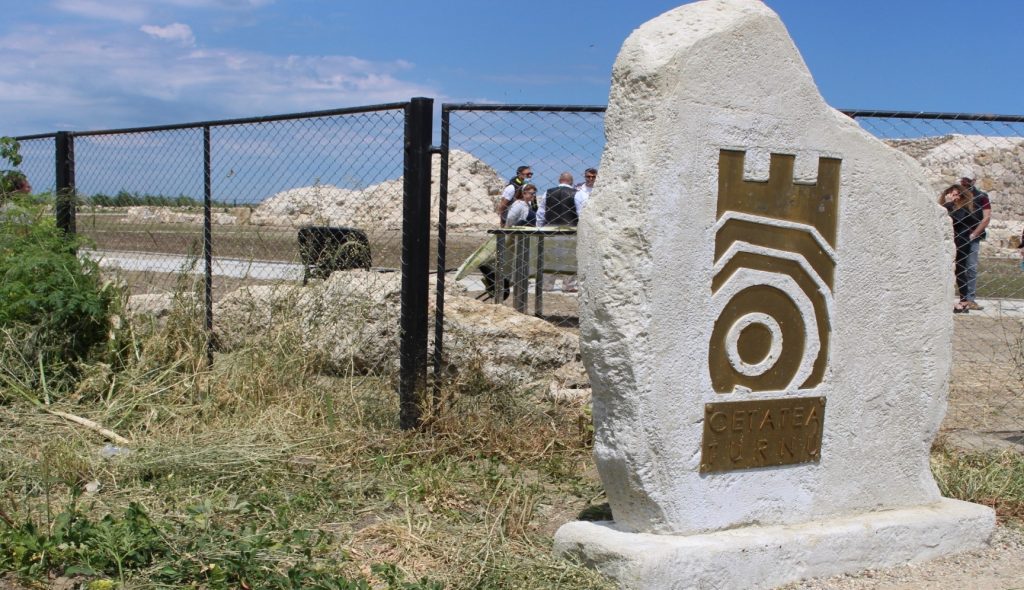
Through the project, the fortress and the fountain were consolidated and restored, the area related to the ruins was arranged by building pedestrian alleys, green spaces, gutters and the architectural lighting and the fencing of the fortress were made.
The achievement of this investment objective was completed on May 12th, 2021 when the reception took place at the end of the works.
TURNU MĂGURELE MUNICIPALITY
The municipality of Turnu Măgurele (in Turkish Kule, in Bulgarian Holavnik) in the south of the country, in the southwest of the county, near the confluence of the river Olt with the Danube at the edge of the Romanian Plain.
The first documentary attestation of the locality appears in a diploma issued by Sigismund of Luxembourg, king of Hungary, on the occasion of the battles waged here in 1394. The fortress belonged to the Ottoman Empire, intermittently, between 1417-1829, being a Turkish raya of Nicopole’s sanjak. After the Russo-Turkish war of 1828-1829, the locality became part of Wallachia, as a result of the Treaty of Adrianople. After 1829 the locality is relocated on the nearby hill, near the localities of Odaia and Măgurele, and the fortress is demolished. In 1836 it was officially declared a city by a decree issued by the head of the Romanian state Alexandru Gica.
From 1839 it is the residence of Teleorman county until 1950 and once again from 1952 until 1968, when, following the administrative reorganization, it loses its residence status in favour of the city of Alexandria.
The communist systematization had a major impact on the urbanism of the locality, and the establishment of the Chemical Fertilizer Plant (1962) transformed the city into an industrial one. The forced urbanization caused the city’s population to grow substantially, reaching almost 37,000 inhabitants in 1992.
After the 1989 Revolution, the city suffered a sharp decline as a result of the restriction of industrial and economic activities and the migration of the population to large cities and other European countries.
NIKOPOLE
The town of Nikopol is the administrative center of the municipality and is one of the oldest towns in Bulgaria. It is located on the right bank of the Danube river. It is located 54 km northeast of the regional centre of Pleven.
The nearest Bulgarian cities are the centers of the neighbouring municipalities: Gulyantsi – 24 km southwest and Belene – 36 km southeast of Nikopol.
On the opposite bank of the Danube river is the Romanian town of Turnu Magurele.
According to archaeological research, the earliest traces of life date back to the Old Stone Age. Remains from the time of the Thracians /1200-100 BC/ have been found in the area of the hill “Kaleto”. During the Roman Empire, the settlement was included in the province of Moesia. Later, in the 4th century, after the division of the Roman Empire, the city remained within the borders of the Eastern Roman Empire /Byzantium/. In 1059 it received the name Nikopol /Nikopolis – city of victories/.