

Description
Importance, geographical position, stages of archaeological research, composition
The medieval fortress “Turnu” is located in the Danube meadow, near Turnu Măgurele, about 3.5 km, southwest of it, about 700 m from the river bank, at a distance of 1 km from the terminal DN 52, which connects Bulgaria via a ferry line, near the city of Nikopol (the old Ottoman fortress of Nicopolis) and approx. 5 km from the mouth of the Olt into the Danube.
According to the Land Book, the usable area of the site is 11397 sqm.
Turnu Fortress is the only one in the series of fortifications north of the Danube, built by Mircea cel Batran and then occupied by the Ottoman Empire, which was not covered by modern cities after their dismantling and abandonment (such as Turnu-Severin, Giurgiu and Brăila).
About the fortress of Turnu, August Treboniu Laurian records for the first time in the Historical Store for Dacia from 1846 and considers that the fortress was built on the ruins of a Roman tower. Soon the fortress was visited by Caesar Bolliac who undertook an excavation, described the ruins and concluded that here was the Roman fortress Romula. In fact, the material used to build the first phase of the fortress, during the reign of Mircea the Old, was brought from the former Roman camp at Oescus, located south of the Danube, as Grigore Florescu would later discover. After the dismantling in 1829, the ruins of the fortress became the source of building material for locals and local authorities. The process of plundering the medieval remains on the banks of the Danube was stopped by the intervention of General Radu Rosetti, who signaled to the Commission on Historical Monuments the historical and archaeological importance of the ruins.
The following archeological excavations were carried out by Grigore Florescu, as a delegate of the Historical Monuments Commission (HMC), from 1936 to 1939 and then in 1943, when in fact he cleared the walls of the earth and the demolition material deposited in time, an activity that was the subject of extensive correspondence with the local authorities and the Historical Monuments Commission, which had commissioned the work. In the year when Grigore Florescu started the archeological excavation campaigns, the place was presented in the form of an earth mound, covered with trees. In the first three consecutive campaigns, the excavation was carried out to a depth of 5 m, close to the surrounding limestone elevation, revealing the medieval and Turkish phase of the fortress.
Between 2006 and 2009, the last archaeological research campaigns, organized by Ionel Cândea and Ecaterina Țânțăreanu, in which the County Museums of Brăila and Alexandria collaborated, aimed to create the stratigraphic and chronological link of the Ottoman pentagonal fortifications with the central tower and to start surveys on the Turkish city, adjacent to the fortress and revealed by aerial photographs and topographic surveys. In this stage, a main section was drawn perpendicular to the tower, on the axis oriented north – west – south – east, which must connect the two fortified complexes, the circular stone tower and the pentagonal line of external reinforcement, made of dirt.
In the last form, at the end of the Ottoman occupation, the Turnu Fortress was made up of four main elements arranged almost concentrically:
– a circular wall in the center;
– an enclosure wall;
– a defensive ditch bordered by walls;
– a second defense line made of dirt, pentagonal in shape, with corner towers, located outside the first enclosure.
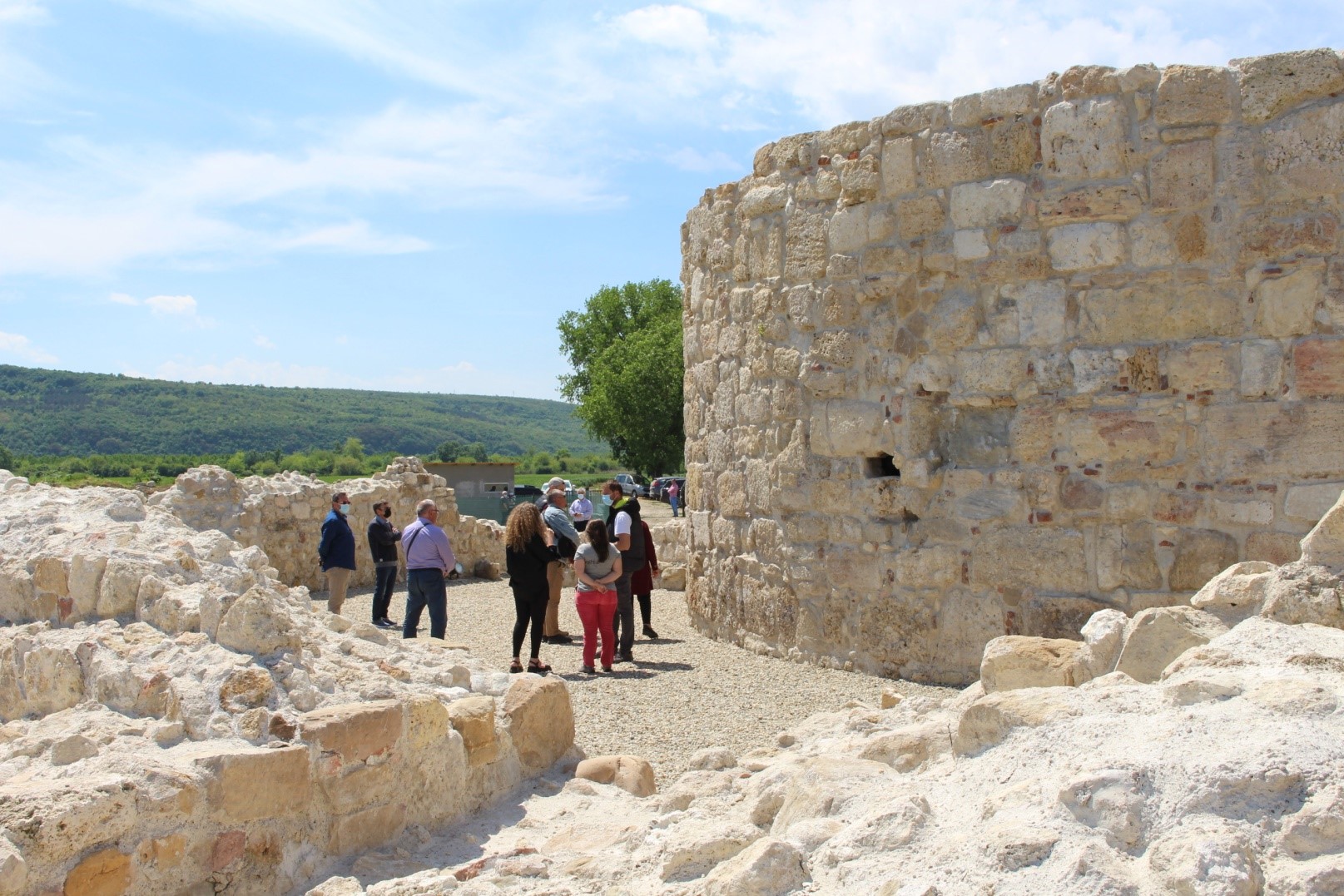
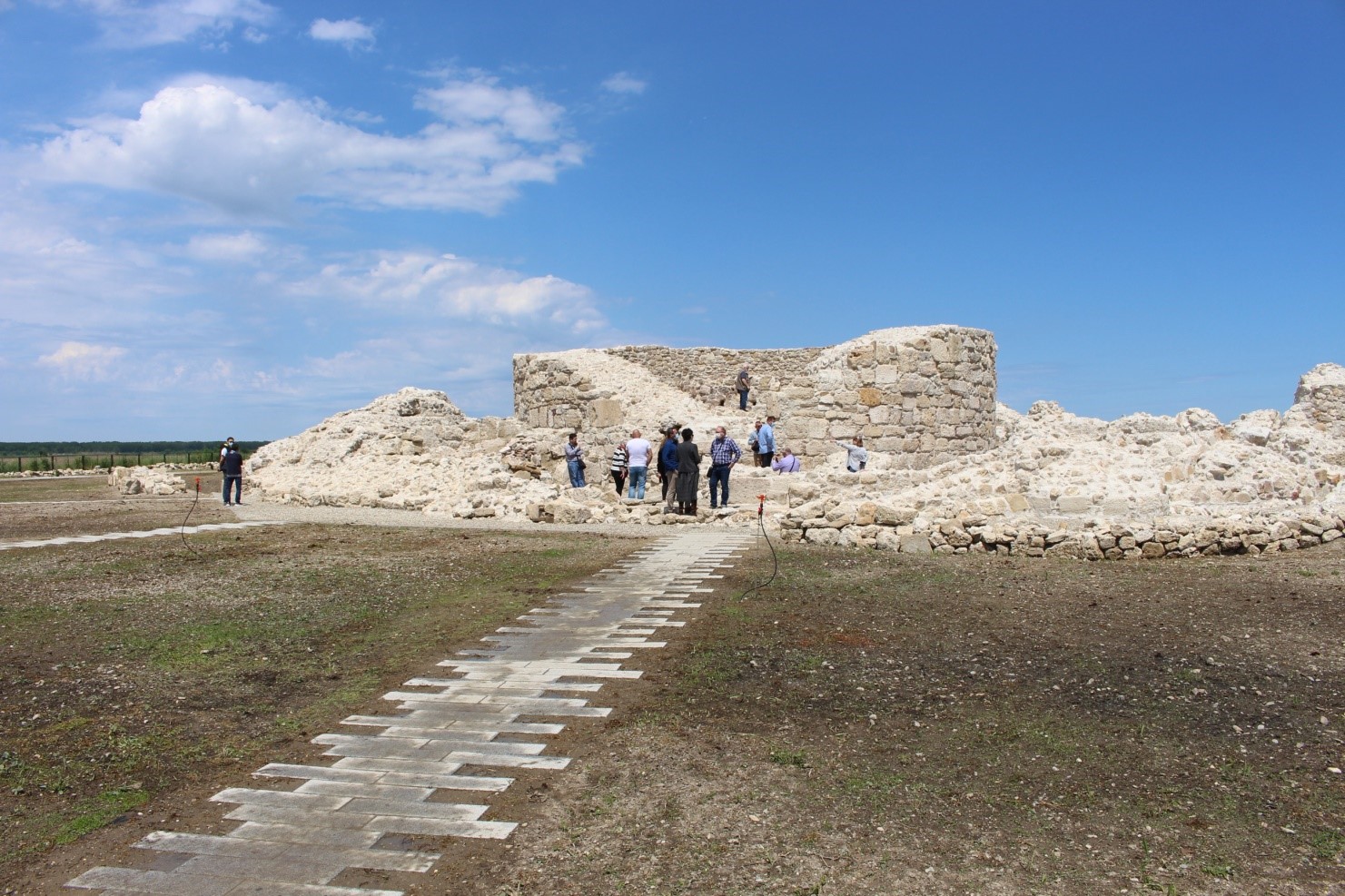
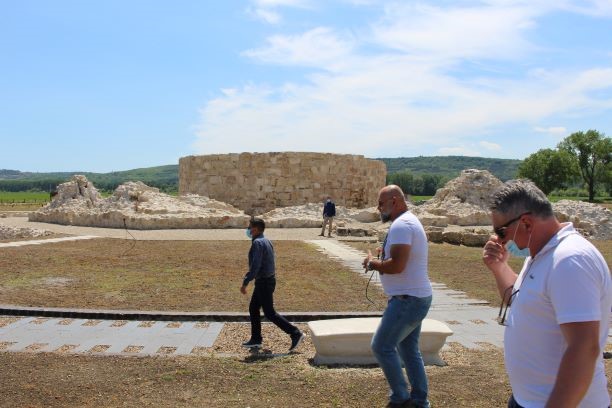
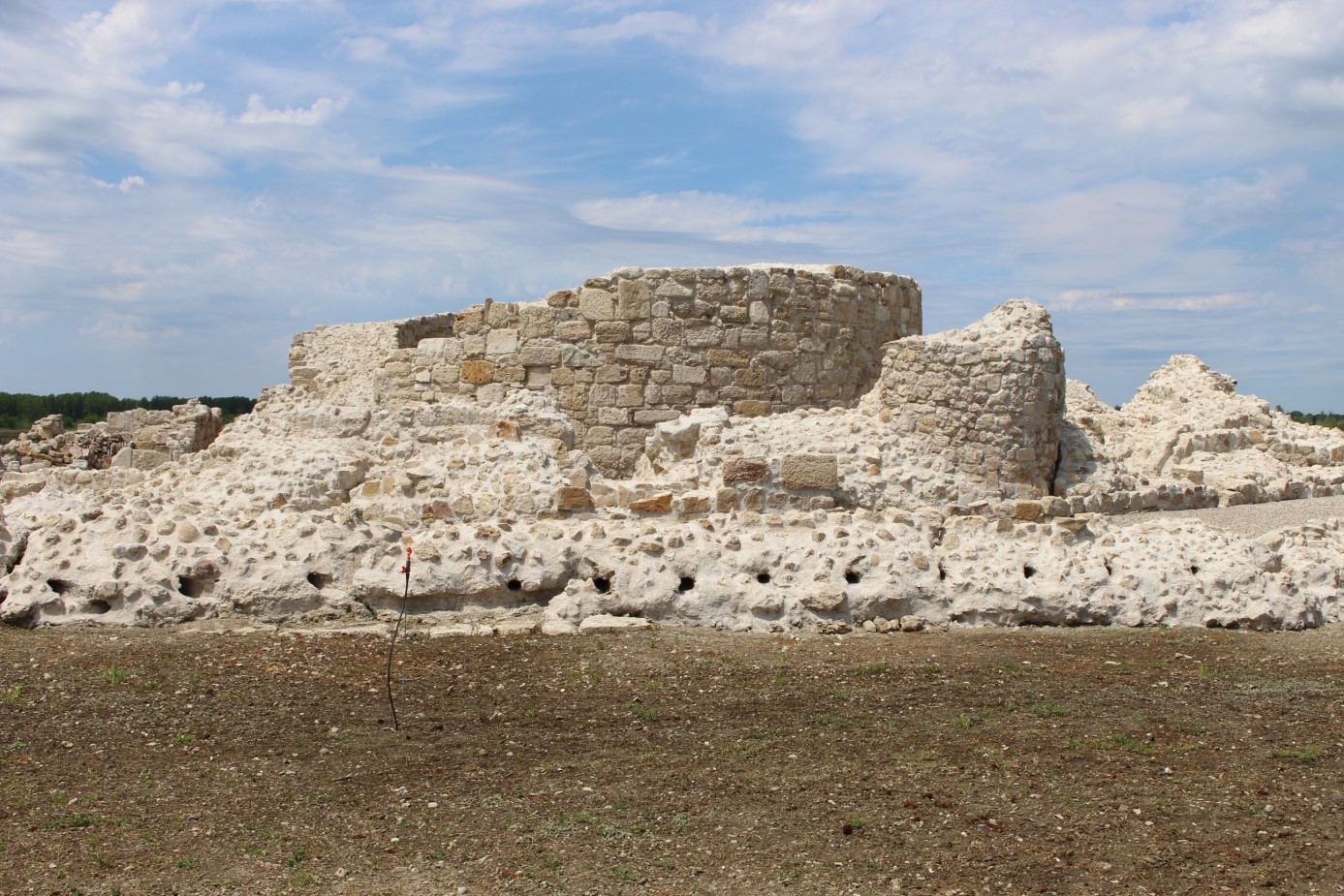
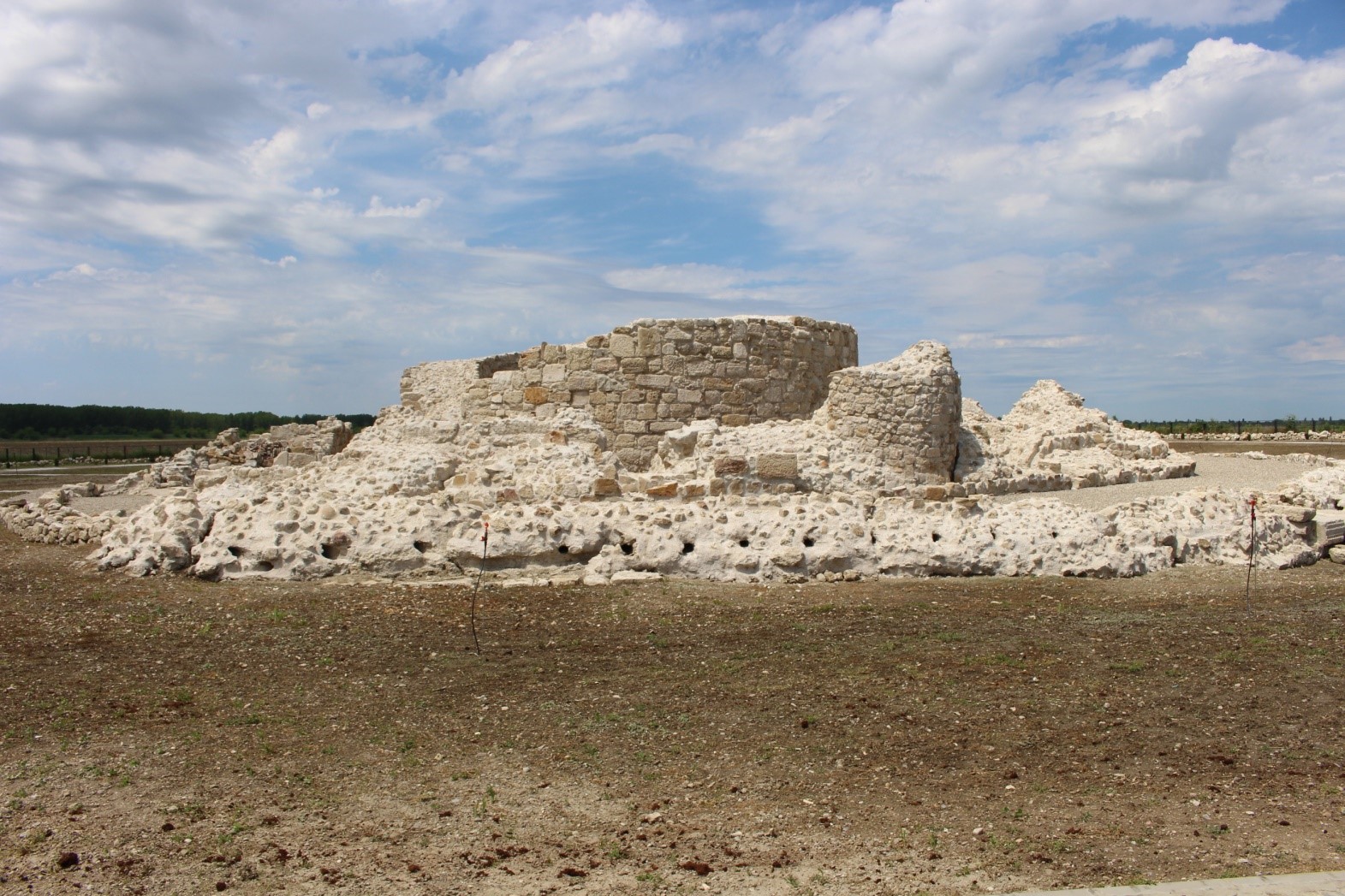
The most important element of the fortification, from which the fortress also took its name, is the circular central tower, with a diameter of 17.40 m and 3 m thick walls.
Given the historical importance of the archaeological site, it was included in the list of historical monuments of national interest, with the following code: TR-I-s-A-14229.
TURNU FORTRESS THROUGHOUT HISTORY
Geographical location and historical names of the fortress
At the end of the 14th century, when Mircea the Old ascended the throne of Wallachia, the Ottoman Empire had already occupied important strategic positions in the Balkan Peninsula and aimed to control the Lower Danube region, i.e. both banks of the river. Under these conditions, the lord of Wallachia built and strengthened a whole chain of fortresses on the southern border of the country, creating an articulated system, consisting of offensive and defensive points on the left bank of the Danube at Severin, Turnu, Giurgiu, on the right bank of the river, at Silistra and in Dobrogea at Hârşova and Enisala which in turn were outposts of the fortresses at the mouth of the Danube, Chilia and Cetatea Albă. The Turnu Fortress is located near that ford of the Danube where the straightest road between Transylvania and the Balkan Peninsula passed, which came on the Olt Valley and continued on the Osam Valley, in Bulgaria, where merchants from Transylvania descended and ascended, but also the Turks invaded Wallachia and Transylvania. In front, on the right bank of the Danube was the fortress of Nicopolis, which since 1393 had been occupied by the Turks and from which it receives the name of Little Nicopolis (Nicopolea Mică, Nicopolis Minor), name with which the Turnu fortress is designated both in foreign documents as well as in the Romanian ones. All the other names it bears in historical sources, the Turkish Kulé, the Slavic form Holovnik and the Greek Pirgos represent the equivalent of the Romanian word Turnu.
14th century
In the current stage of the research, the exact date of the construction of the Turnu fortress cannot be established, nor could a phase prior to the end of the 14th century be demonstrated, i.e. a late Roman or early Byzantine phase. The first Turkish conquest of the Turnu fortress is one of the consequences of Baiazid I’s first expedition across the Danube in the autumn of 1394. After crossing the river at Nicopolis at the head of a huge army of vassals from Europe, the sultan conquered and occupied the Turnu fortress, after which he set out in pursuit of Mircea, who retreated on the road to the capital of Argeş near which the battle of Rovine took place on October 10th, 1394. On his return the sultan followed the same road to Nicopolis, but did not cross the Danube before installing in Nicopolea Mică a Turkish garrison and probably a Romanian one, loyal to Vlad Uzurpatorul, which the Turks had just placed on the throne of Wallachia. From this moment on, the Turnu fortress was targeted in almost all the anti-Ottoman campaigns from the end of the 14th century and the beginning of the 15th century, because it was in the immediate vicinity of the city of Nicopolis, which at this time became an important center of the Ottoman imperial administration. In the summer of 1395, when the king of Hungary Sigismund of Luxembourg organized a new expedition to Wallachia, after putting Mircea back in the royal seat, he headed for Turnu. After a siege in which war machines were used to demolish the walls, the Hungarian king conquered the fortress with great sacrifices, in which he then installed his own Hungarian garrison. A new episode in these alternative dominions of the fortress was connected with the defeat of the crusading knights at Nicopolis on September 28th, 1396, when, following the Ottoman victory, a Turkish detachment crossed the river on the left bank and after scaring the garrison left there with a year ago by Ştibor, the voivode of Transylvania, he recaptured Little Nicopolis. During this rule the fortress now called Holovnik, probably severely damaged during the battles, was rebuilt by the Turks, an event recorded by a stone inscription, dated during the reign of Baiazid Ildirâm, but written in the Slavic language, which was known to the occupied population. It is not known the conditions in which the fortress returned to the lord of Wallachia, but it is certain that on March 23th, 1399, Sigismund of Luxembourg notes, in an epistle, the summary of the recent letter he received from Mircea the Old, dated 16 days behind in the Little Nicopolis.
15th century
In the first two decades of the 15th century, in the context of the civil war resulting from the succession battles to the throne of the Ottoman state and the aggressive intervention policy of some Christian states such as Venice, Byzantium, Wallachia, the policy of the Gate in the Balkans was to create bridgeheads and the left bank of the Danube and checkpoints in Dobrogea. Thus, in the campaigns of 1419 and 1420 Mehmed VI, after rejecting Michael I back across the Danube, transformed the Danube fortresses of Giurgiu, Turnu, Enisala and for a time Severin and Chilia, into Ottoman outposts in the Romanian sector of the river, thus becoming Turkish. Once incorporated into the Ottoman Empire, these territories were transformed into military and economic complexes, called kaza, run by a kadi and subject to fiscal, legal and administrative regulations under the direct jurisdiction of a sanjak-bey. Through the firmans of the sultans, both Giurgiu and Turnu were, during the whole period of the Turkish occupation, subordinated to the Nicopolis bey, in turn under the obedience of the beylerbey of Rumelia.
16th – 18th centuries
In Turnu, in the 16th and 17th centuries, the most important Ottoman ruler was the naip, his constituency being a niabet. In an order of July 12th, 1566 addressed to the kadi of Nicopolis, it is found that the Schela and the town of Turnu depended administratively on it. In the census register from 1568, subordinated to the sanjak-bey from Nicopole, there is no kadi of Turnu, and in the register of the secretariat of the sheep from 1612-1613 there is no indication of a kaza named Turnu, Holovnik or Kulé. This fact is confirmed by the lack of express documentary mentions of the name of Kadi and Kaza of Turnu in the documents of the Ottoman administration for this territory, otherwise reduced in area, for the entire period of Turkish occupation and by Evlia Celebi who, visiting the region, records the title of niabet of this administrative unit. The fortress, in turn, was led by a dizdar (pârcălab) and not by a kadi, and Schela by an emin. Data on the numbers of Turkish garrisons guarding the Turnu fortress are known, indicating, for example, in the second half of the 16th century at Turnu a number of 41 soldiers 33 crossbowmen and 8 gunners, and towards the end of the 17th century, in 1669-1670, there were only 18 soldiers. In the Russo-Turkish war of 1768-1774, the Turnu fortress, defended by an Ottoman garrison was besieged by the Russian general Repnin, the damage being repaired later, between 1785-1786. Shortly afterwards, a new war on the territory of Turnu Fortress between the Russian-Austrian-Ottoman armies in 1787-1791 led the Turkish authorities to take measures to strengthen the defense of Turnu Fortress not only by renovating the old fortress but also by building a new one, somewhere right in front of the Nicopolis, which will be called Turnu Nou.
19th century
Turnul Nou and Turnu Vechi will suffer during the Russo-Turkish War of 1806-1812, both fortifications being repaired until 1818. The last assault on the Turkish fortress of Turnu took place in the context of the Russo-Ottoman War of 1828-1829, on January 25th, 1829, when General Malinovsky, at the head of the Russian army, conquered the fortress, expelling the Turks definitively as a result of the peace and the peace treaty of Adrianople, by which Wallachia took over its old territories on the Danube line occupied by the Ottoman Empire for 400 years. Shortly after this date, the fortress was dismantled and its ruin followed a continuous and accelerated course. Thus, already in the middle of the 19th century, it appears in the records of August Treboniu Laurian and Cezar Bolliac already as a ruin.
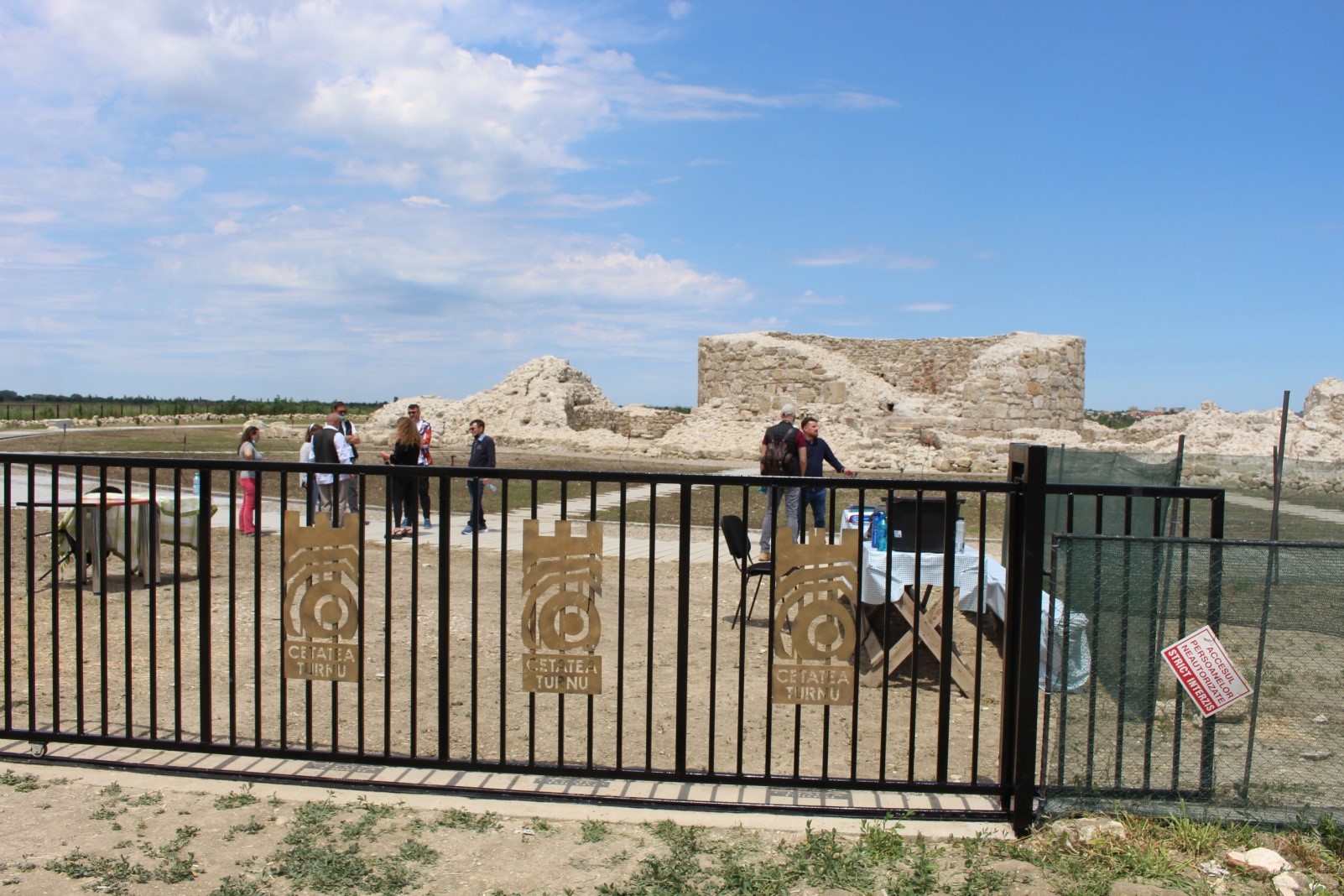
Given the precarious state of conservation, the difficult access, as well as the need for cultural-tourist exploitation of the archaeological site of utmost importance, its arrangement, consolidation, conservation and restoration was carried out in partnership with the municipality of Nikopol within the project “The Bridges of Time: an integrated approach for improving the sustainable use of Turnu Măgurele-Nikopole cross-border cultural heritage”, Interrg V – Romania – Bulgaria Programme.